

When negotium becomes otium
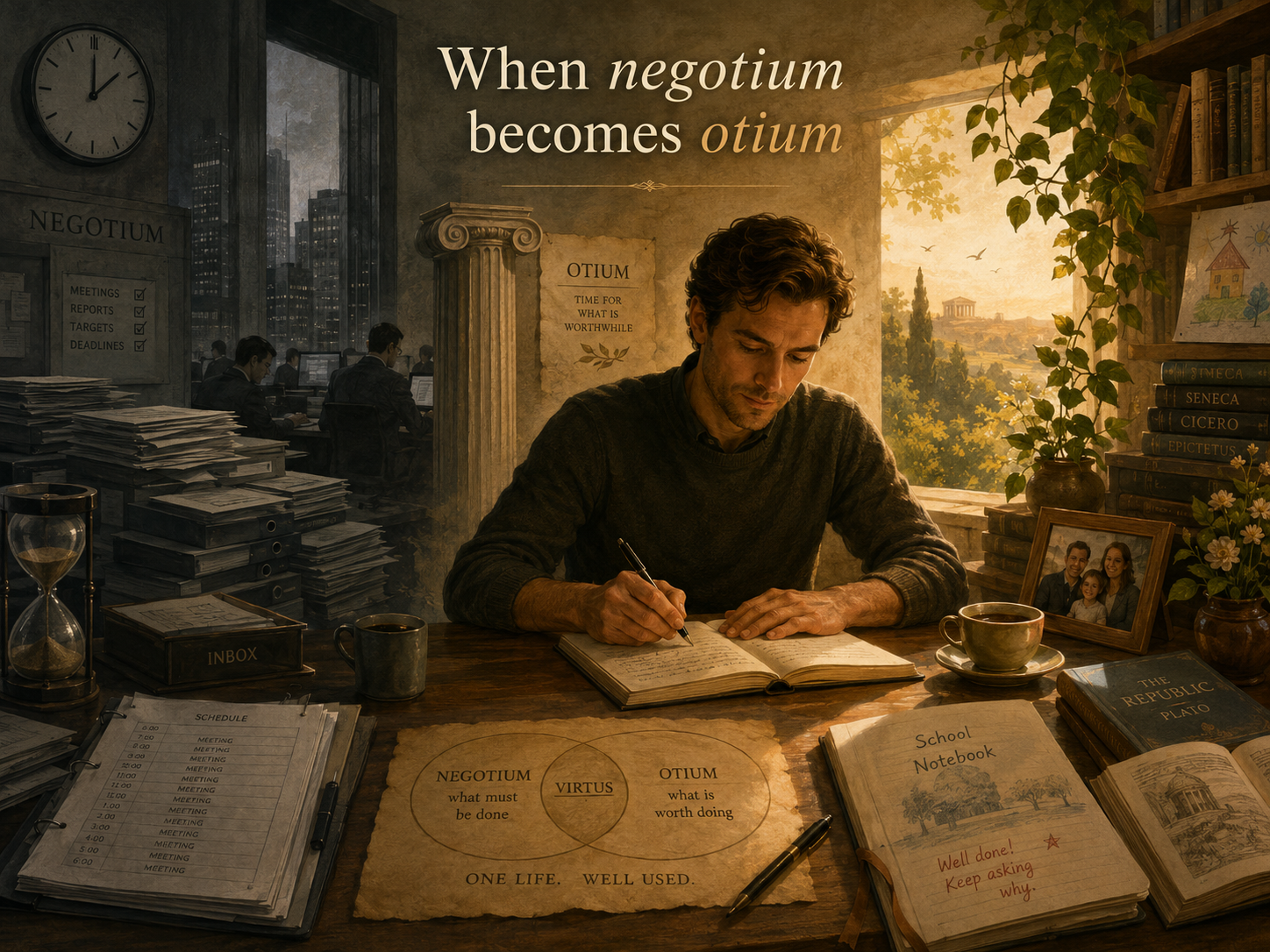
Where Negotium Meets Otium
This is something I first learned at school, but understood more deeply at home.
My parents taught me that time should not only be spent. It should be lived well.
The ancients had precise words for this.
In Latin, otium meant time devoted to things worth doing for their own sake: reading, thinking, friendship and conversation.
Work was negotium — literally nec-otium, the absence of leisure.
But perhaps the best life is not one in which we simply escape negotium.
It is one in which we transform it.
When we work on something we genuinely enjoy, when curiosity replaces obligation and purpose replaces routine, work begins to contain something of otium.
It still requires effort.
But the effort no longer feels empty.
This is one of the reasons I founded Phronesium: to build something around the subjects I care about most — judgement, ethics, risk, decision-making and better thinking.
It does not make work disappear.
It makes the work feel worth doing.
This does not mean that every job must be a passion, or that work should consume the whole of life.
It means that the finest work gives something back while we are doing it.
It teaches us. It absorbs us. It connects us with others. It makes time feel lived, not merely sold.
Perhaps freedom is not always the absence of work.
Sometimes it is finding work that no longer feels like the absence of life.
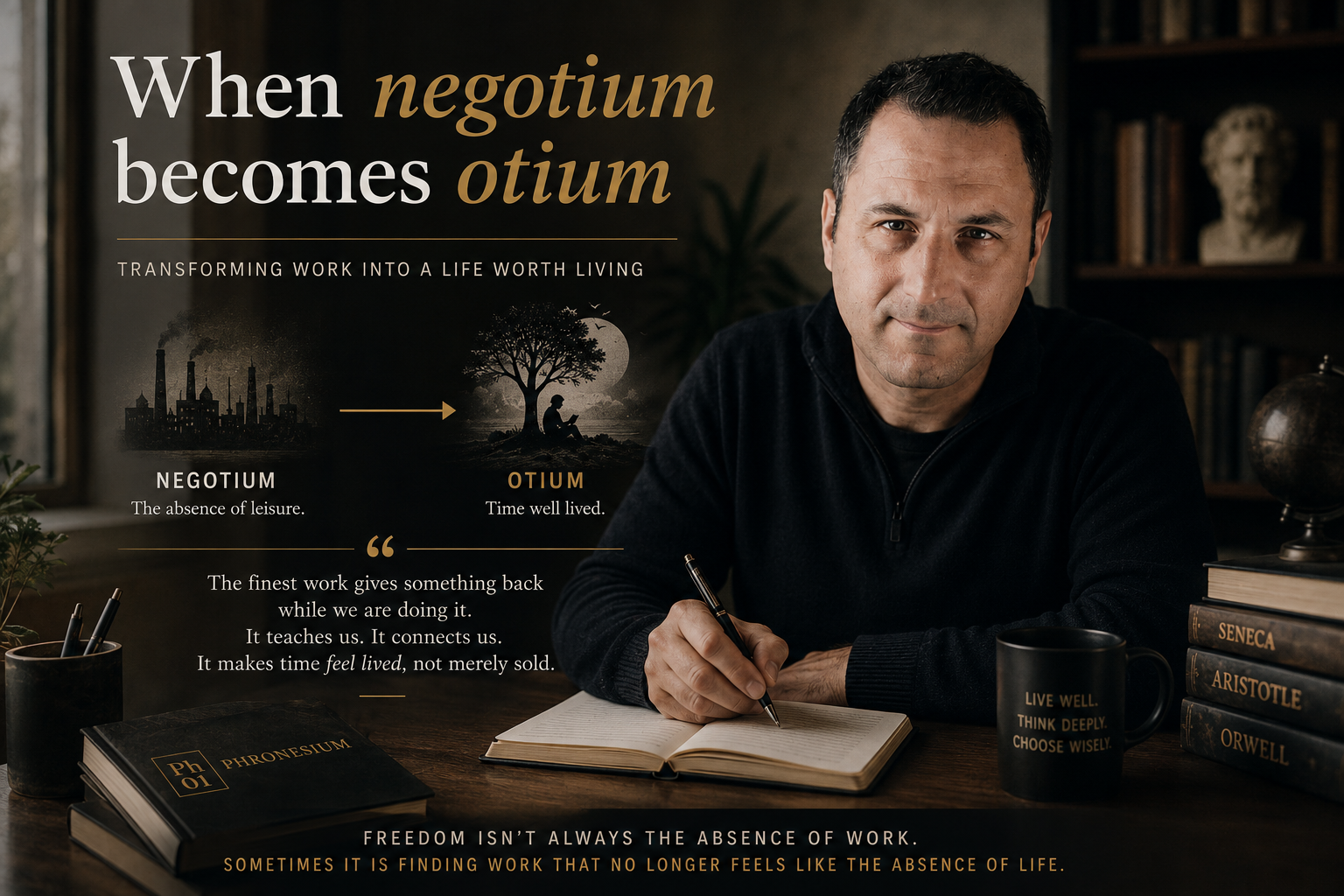
Work That No Longer Feels Like Work
