

Decision-Making Classics
There are many modern ways to make better decisions.
You can download an app, attend a webinar, buy a framework, or produce a 49-slide deck explaining why the obvious was not obvious until a steering committee made it so.
Or you can do something far more dangerous: read old books.
This handwritten list brings together ten classics on judgement, prudence, reason and practical wisdom: Aristotle, Cicero, Epictetus, Marcus Aurelius, Seneca, Montaigne, Descartes, Bacon, Pascal and Sun Tzu.
And yet these writers understood something we often forget: better decisions are not made by intelligence alone.
They require character. Discipline. Doubt. Self-command. A sense of proportion. The courage to see facts as they are, not as our PowerPoint would prefer them to be.
Aristotle called it phronesis: practical wisdom. The ability to judge well in real situations.
That is also the spirit behind Phronesium.
Because the world does not suffer from a shortage of information but it suffers from a shortage of judgement.
Better decisions come from disciplined minds, not just clever ones.
P.S.
Suggestions are very welcome.
Any good recommendation will be read carefully, assessed seriously, and treated with only the minimum level of philosophical suspicion required by good judgement.
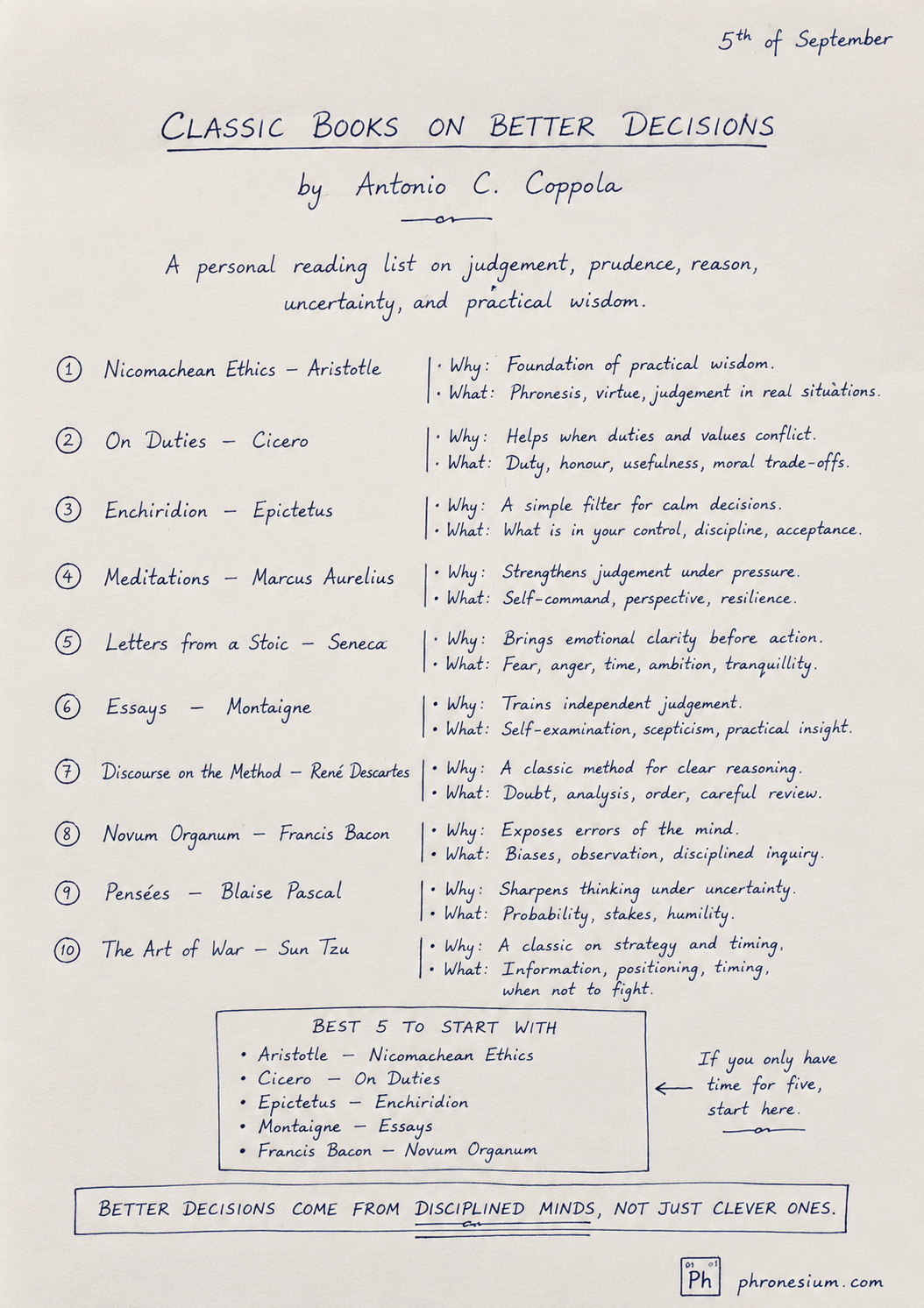
Books for Better Judgement
Classic readings on wisdom, reason, and the art of deciding well
